What Are Two Different Types of Beef During the Slaughter Process
Meat & Poultry Fabrication
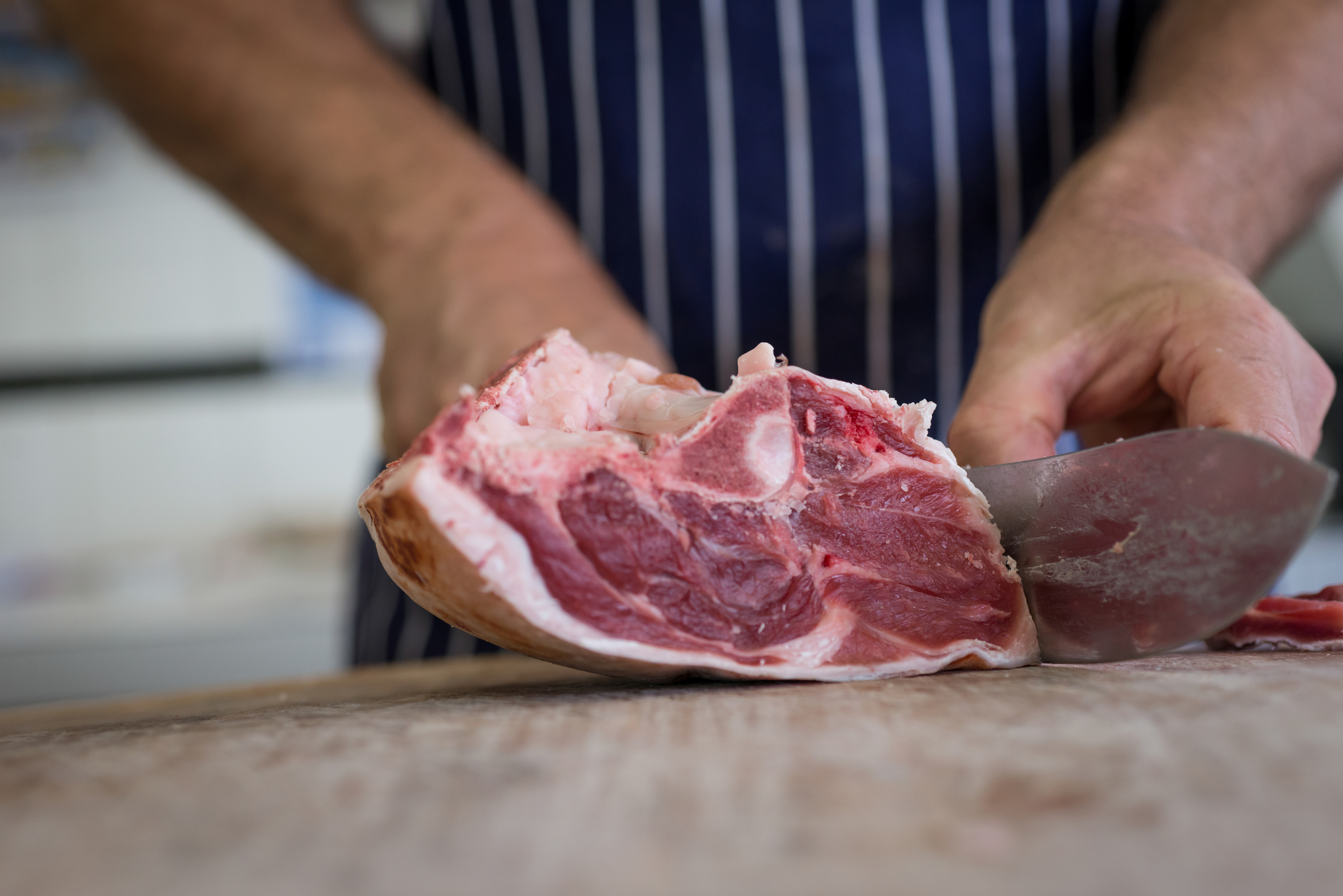
The extent of meat cutting and fabrication performed in professional kitchens today depends on the philosophy and goals of the performance. Some restaurants, considering of the consistency and simplicity, prefer to buy portion cuts. On the contrary end of the spectrum, some chefs today are adopting whole animal utilization and prefer purchasing carcasses or sides of meats to use in various menu applications. The success of a meat cutting programme depends on quality command, food cost control, and production utilization. It requires a knowledgeable person skilled at accurately cut meats, poultry, fish, and shellfish, plus cooks dedicated to using not just the prime cuts but under-utilized cuts, trim, and bone for other culinary applications.
Meat Fabrication
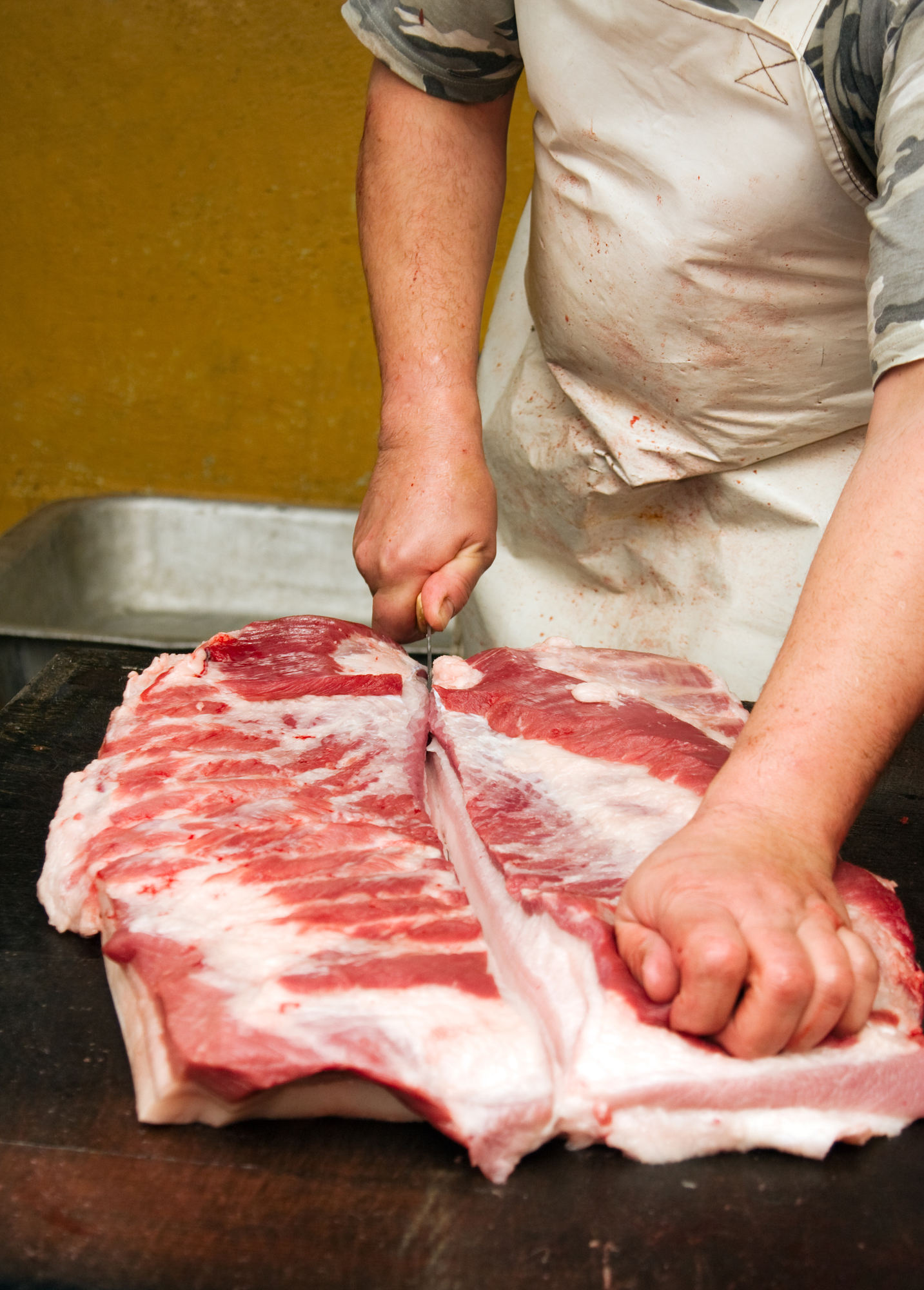
Butchering is a term ordinarily used for the procedure of slaughtering and preparing meat for retail or wholesale use. Meat cutting, or fabrication , is the procedure of cut, boning, and portioning large cuts of meat to menu specifications. Becoming adept at fabricating whole carcasses or primal meat cuts takes do often through an apprenticeship under a principal meat cutter.
Dressed carcasses are processed whole , split into sides , or cutting into quarters (fore quarter and hind quarter) . More often carcasses are fabricated into fundamental cuts of meat. These are large cuts based on the muscle and bone construction of the animal. From there the meat is further divided into sub primal cuts that are often vacuum sealed and boxed fresh or frozen (the origin of the term "boxed meats") or the meats are processed further into portion cuts every bit needed.
Skeletal and Musculus Construction
At that place are seven major basic in a skeleton that assistance in meat identification and fabrication. Each of these seven bones are plant in relation to one of the major muscles in the carcass (see skeletal meat nautical chart).
Primal Cuts
There are four major central cuts , the shoulder , rib , loin , and leg , found on all animal carcasses, only depending on the species there are some differences in naming and fabricating these cuts. For example, a beefiness chuck is the same cut as a lamb shoulder or pork shoulder butt . A beefiness circular is the same as a veal leg and a pork ham .

Location of the 7 Major Bones on a Beef Carcass
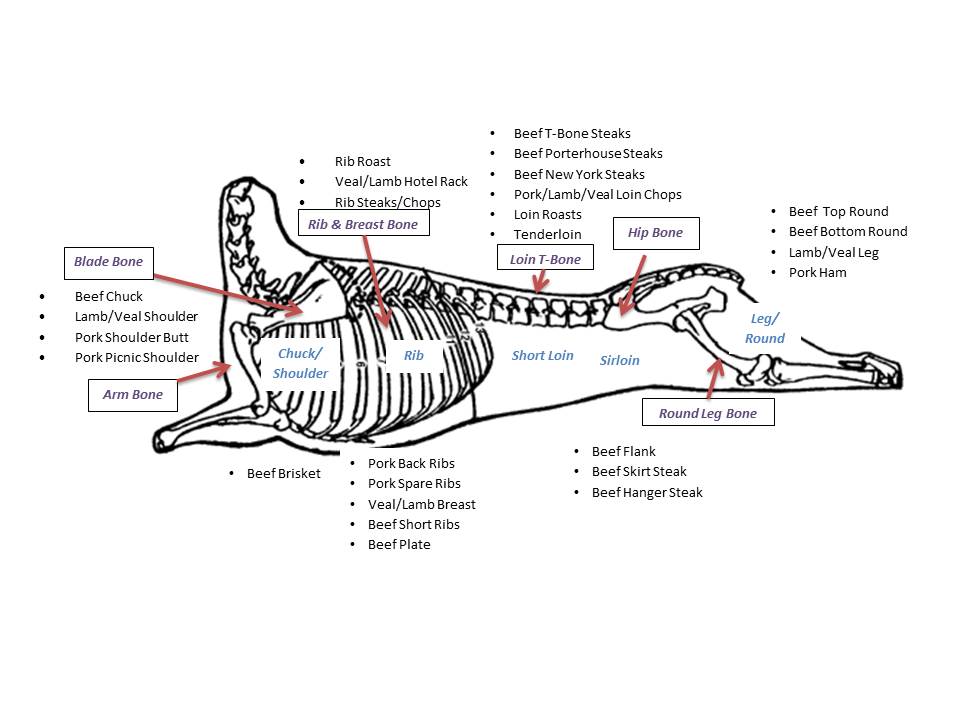
Sub-Primal and Portion Cuts Derived from the Cardinal Cuts
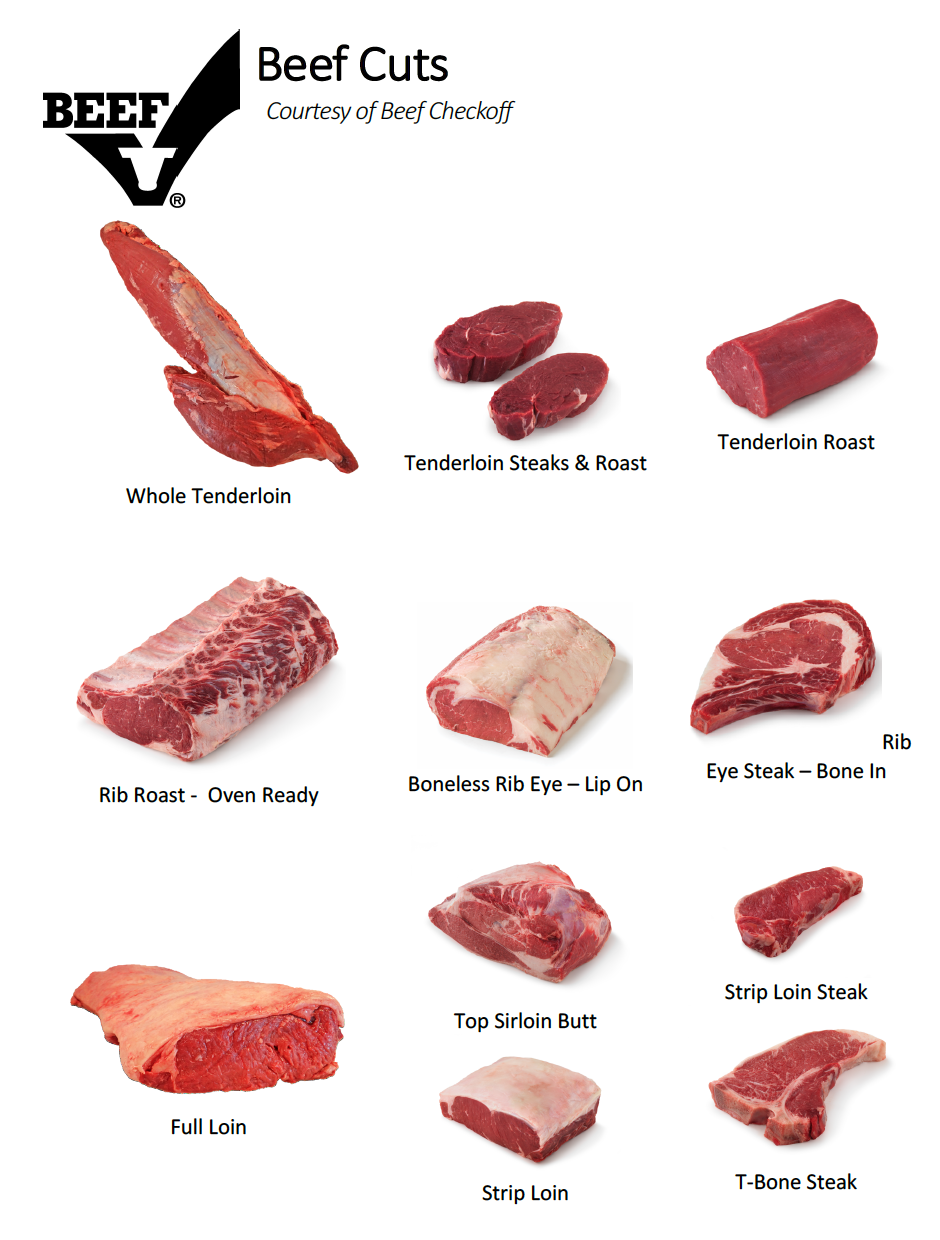
Learning the appearance and germination of major cuts along with the basic structure helps in fabricating too as cooking. Come across specific meat charts on beef, veal, pork, and lamb for the names and locations of cardinal, sub primal, and portion cuts.
There are several pocket-sized primal cuts found on each type of carcass which are usually fabricated differently depending on the animal and its size. For example, on a beef carcass the brisket , plate , and flank are separated into three distinct cuts, but on a veal carcass it is kept whole as a bone-in veal breast .

Lamb shanks and pork hocks (or shanks) are often cooked and served whole. Veal and beef shanks are unremarkably cross-cut for braises or soups.
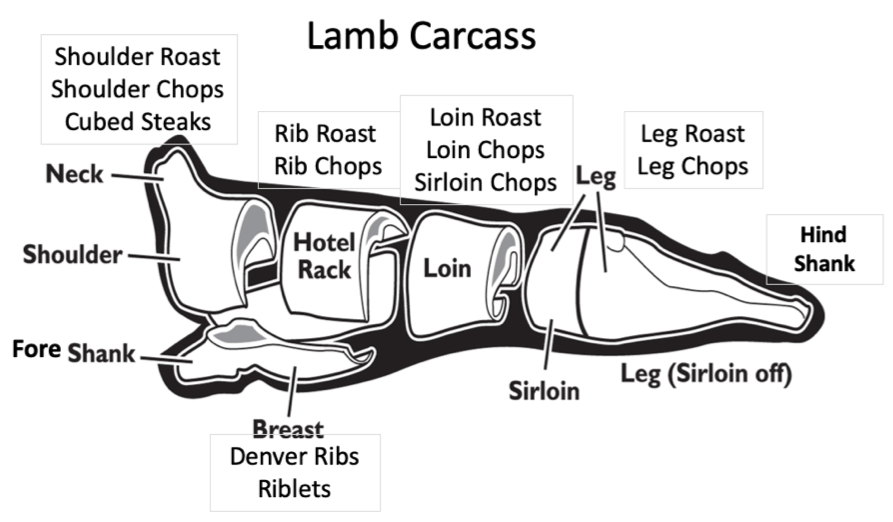
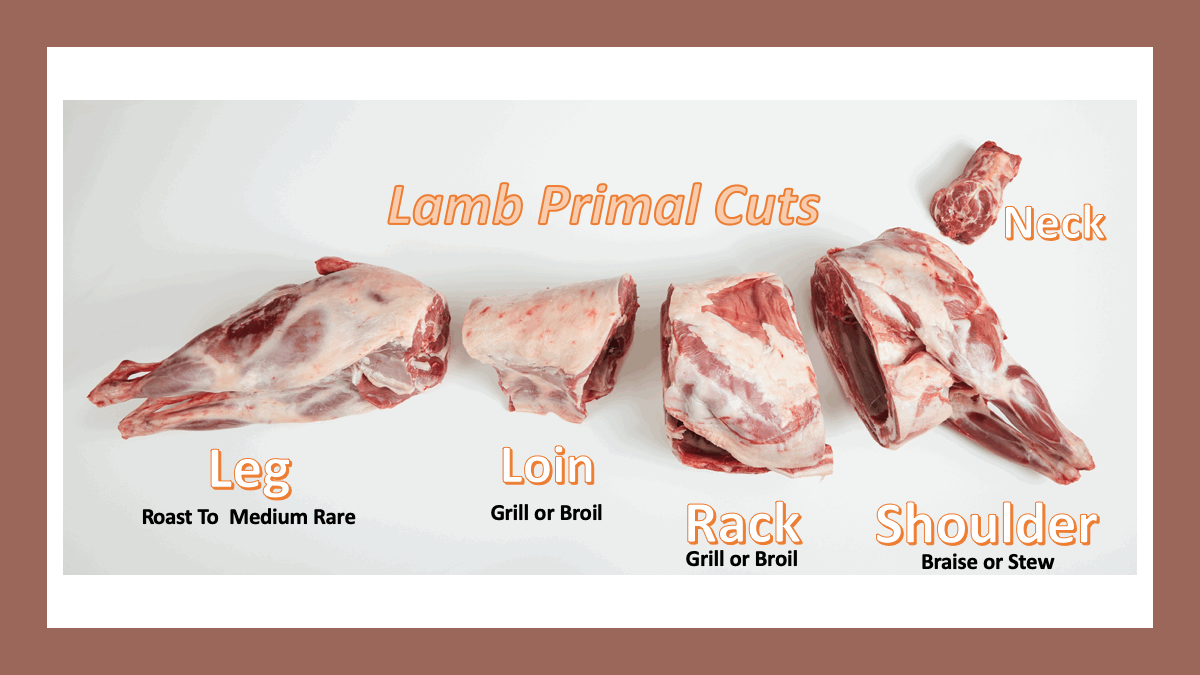
Everything Yous Need to Know Near Lamb Fabrication
Pork carcass breakdown is notably unlike from beefiness, veal, and lamb. Whereas beefiness, veal and lamb carve up the rib and loin muscles betwixt the twelfth and 13th rib, pork carcass fabrication leaves this muscle intact and names it merely the loin. Pork back ribs are marketed for barbecuing. The pork belly is a much more prominent cut producing bacon and spare ribs . The pork shoulder is split into two cuts; the shoulder butt and the picnic shoulder . The jowl produces a type of salary, and the excessive fat often institute along the backside of the animal is used as fatback or rendered for lard . The leg, known as the ham , is often cured and sometimes smoked.
Fabrication Differences Based on Size
Size matters when fabricating meats. A beef carcass weighing in at 600 Lb./275 Thousand is about 33% larger than a veal carcass at 400 Lb./180 K . A pork carcass weighing approximately 270 Lb./125 K . is about 33% smaller than a veal carcass. A lamb carcass weighing nigh 65 Lb./30 Kg . is nearly ane-fourth the size of a pork carcass and i-tenth the size of a beef carcass. The yield on the aforementioned muscle from unlike species can be dramatic. A steer tenderloin tin weigh in excess of half-dozen Lb./2.7 One thousand, compared to a veal tenderloin at almost 2 lb./900 g, and a pork loin at about 1 lb./500 g or a lamb tenderloin at a couple of ounces. Some feasible cuts on a beefiness carcass such as a hanger steak or flank steak are not marketable on a lamb or pork carcass given their small size.
Portion Cuts
A beef full loin is an example of a primal cut. From the beef loin 3 major sub central cuts are produced; the strip loin , the sirloin , and the tenderloin . A strip loin will yield New York strip steaks and if left on the bone can be portion cutting into T-Bone and Porterhouse steaks . The tenderloin will yield filets , medallions , and tournedos . The sirloin yields top sirloin and beefiness culotte steaks. Each muscle somewhen is portion cut whether raw, or every bit in the example of a roast, after cooking.
Start with a make clean station and practise high standards of sanitation when cutting meats. Go on the product common cold, and if needed identify information technology on a pan of ice. Some operations will have temperature controlled rooms to keep the meats cold. Information technology'due south also important to have the correct tools that are properly sharpened and a honing steel handy.
Portion Control
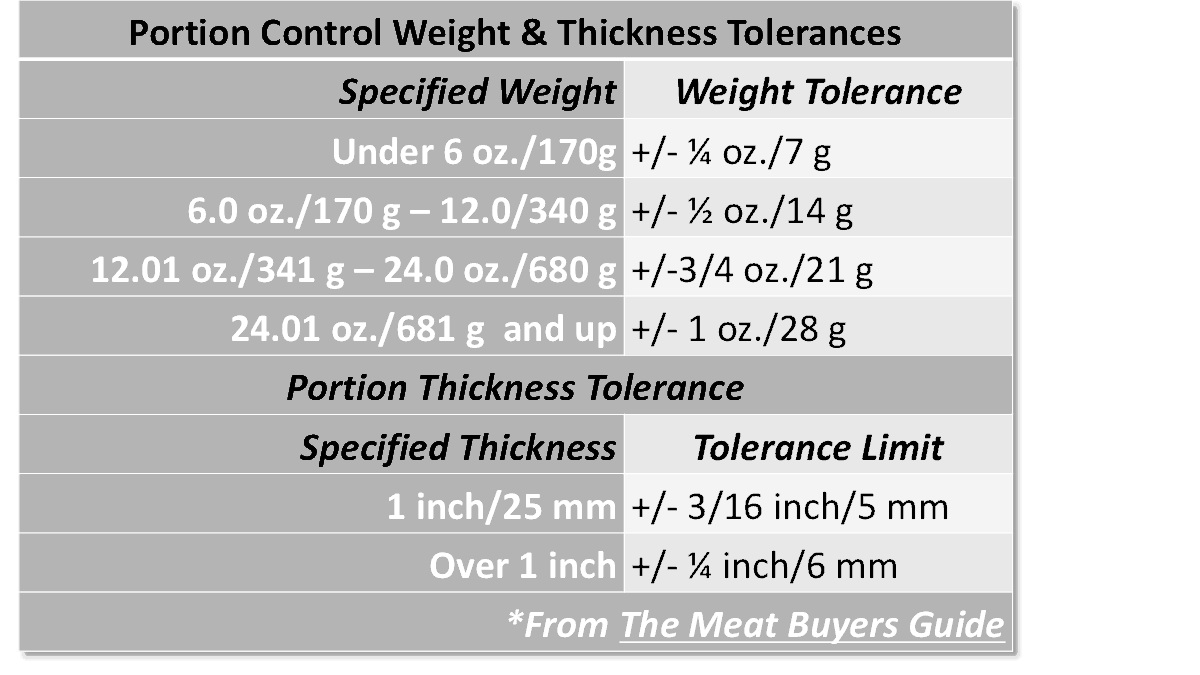
Meats are fabricated or ordered according to the specifications of an functioning based on portion size commonly past weight and also at times based on thickness. These guidelines ensure uniformity in appearance and purchasing costs. Weight tolerance also helps to achieve consistency in quality from the perspective of customer satisfaction. The nautical chart shows the generally accepted weight and thickness tolerance range co-ordinate to The Meat Buyers Guide .
Cutting Management

Although whole muscles are fabricated without regard to the grain of the meat, portion cuts follow the full general rule of cut across the grain of the meat. This produces brusque fibers of meat that when served are easy to cut and chew.
While some cuts, like the loin and tenderloin, consist of whole muscles that are portioned by cutting across the grain, shoulder and leg cuts are made upwards of many muscles with varying degrees of tenderness running in dissimilar directions and making it more than of a challenge to portion. For these cuts some muscles can be seamed out while others are besides small and are used for braises, as stews, or for grinding.
Bone-In or Boneless
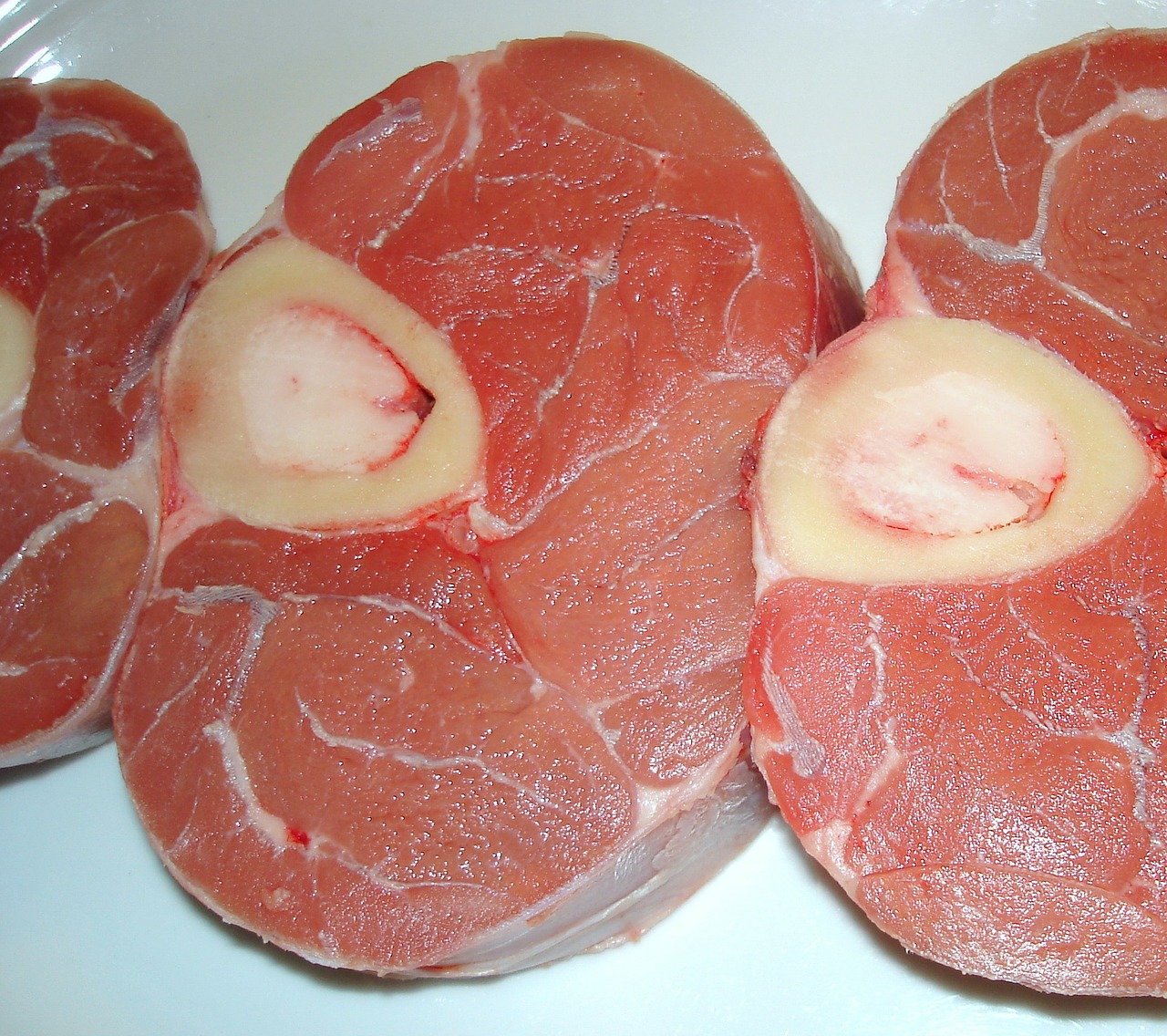
Cantankerous-Cut Veal Shanks
Some cuts of meat, including T-Bone steaks, pork back ribs, rack of lamb, and shanks are fabricated bone-in for appearance and flavor. Os-in meat will have more intense flavor upon cooking versus the boned multifariousness. Today there is a preference in the United States for boneless meats that are easy to eat without the need to separaate the meat from the bone.
Connective Tissue
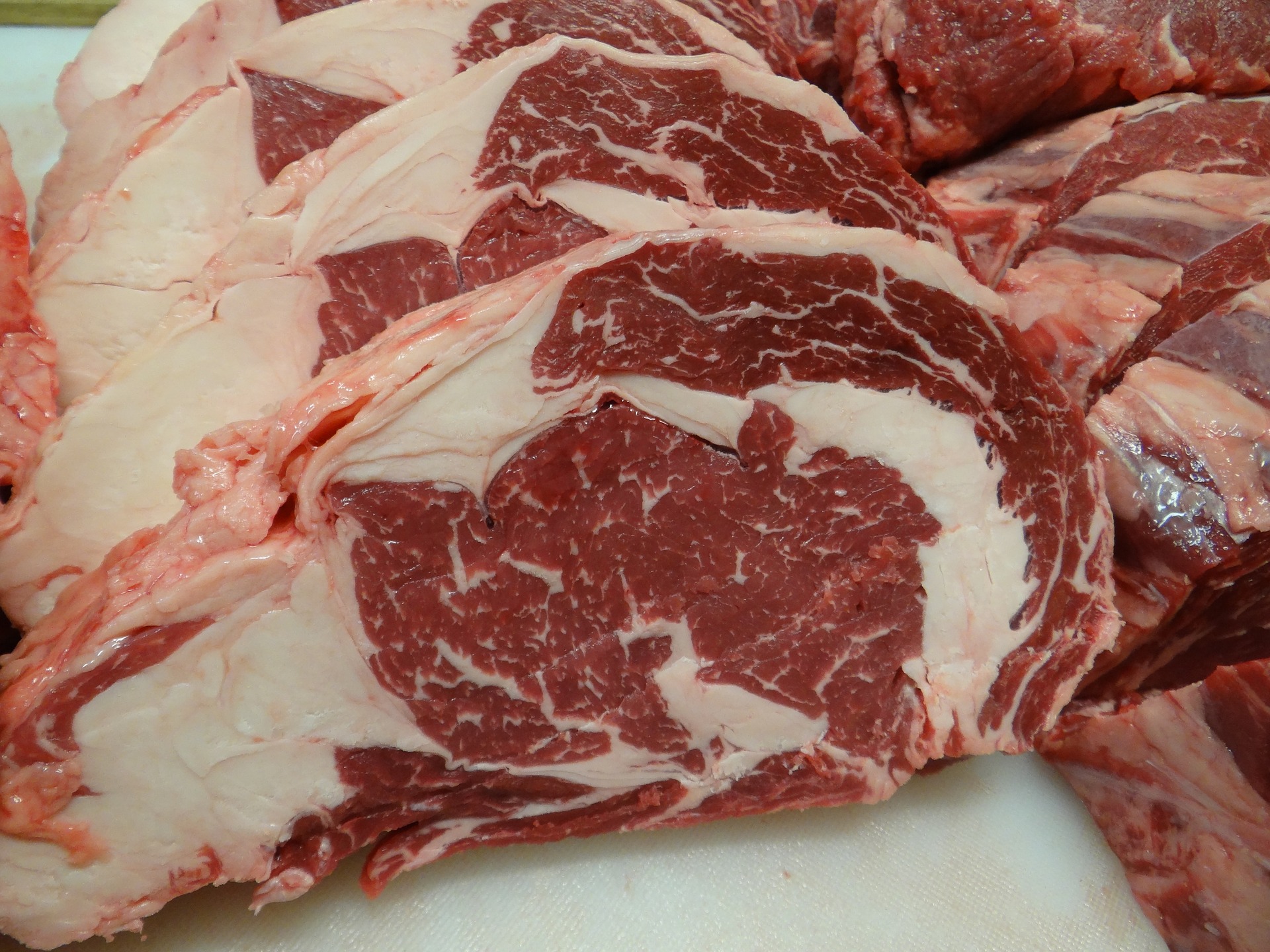
Connective tissue, institute throughout the carcass in the course of elastin and collagen holds the muscle fibers together in bundles and also binds them to the skeletal structure. Elastin is tough and elastic, every bit the name implies. It does not suspension down in the cooking process and therefore it is best removed. Collagen when heated melts and creates gelatin and is often left on the muscle for flavor and texture.
Fat
Embrace fat and intramuscular fat in the class of marbling provides flavor and juiciness. When the marbling in meat muscles melts during the cooking procedure information technology provides flavor and juiciness. Encompass fatty on meat roasts baste the meat naturally while cooking when roasted fat side upwardly. Removing encompass fat or seam fatty is necessary at times merely because it adds flavor care should be taken non to remove too much.


gonzalesdreff1942.blogspot.com
Source: https://www.theculinarypro.com/meat-and-poultry-fabrication-methods
0 Response to "What Are Two Different Types of Beef During the Slaughter Process"
Post a Comment